
 Image 1 of 3
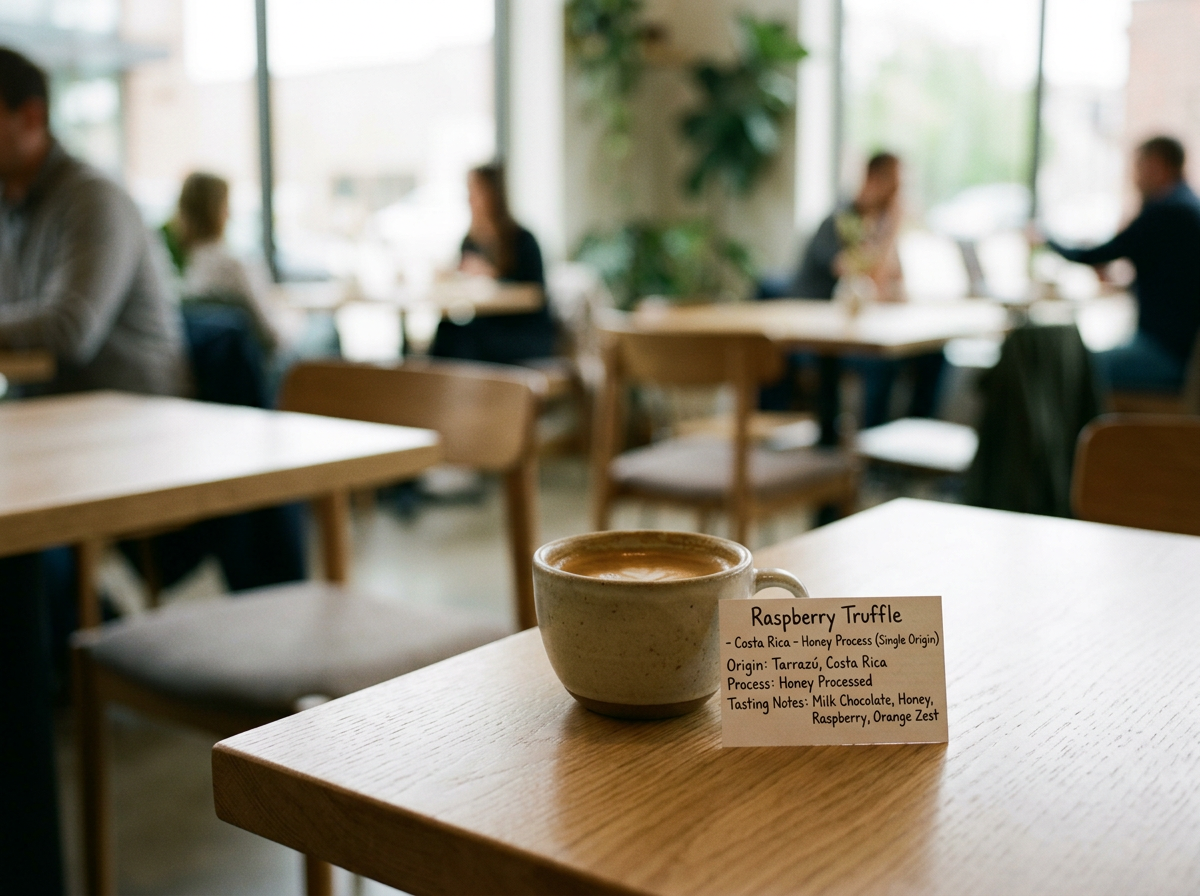 Image 2 of 3
Image 3 of 3
Image 2 of 3
Image 3 of 3
Coffee Background Costa Rica has a world-class reputation for delivering exceptional quality and pioneering agricultural innovation. The country's robust socio-economic infrastructure—including universal healthcare, high education levels, sophisticated agronomic research, and strictly regulated sustainability programs—directly supports its farmers and guarantees that producers receive nearly 80% of the FOB export value.
Note from the Roaster
This beautiful honey-processed coffee comes from the famous Tarrazú region, where smallholder farms average just three hectares in size and it is sweet and fruit-forward. The cup opens with the warm richness of smooth milk chocolate and sweet honey. It becomes bright and lively as the acidity reminds me of orange zest that delivers a vibrant acidity that dances across a delicate, light body. As it cools, the profile transitions into a lingering chocolate raspberry truffle. The mouthfeel/body is light and creates the interplay of chocolate and honey while the acidity turns up the playfulness in the cup. The beautiful thing about this coffee is that the terroir remains intact and coincides with a wonderful raspberry note as the cup cools down.
Roast Recommendations
Light Roast: Accentuates the vibrant raspberry fruit notes and crisp orange zest acidity, keeping the cup light, bright, and incredibly aromatic.
Medium Roast: Beautifully balances the sweet honey and juicy raspberry brightness with the comforting milk chocolate foundation.
Dark Roast: Deepens the chocolate character into a richer cocoa profile, softening the acidity while maintaining a delicate, toasted-honey sweetness.
About the Producers This lot is produced by a passionate community of smallholder farmers in the rugged Tarrazú region. During the harvest, cherries are carefully selected based on strict farm conditions and peak ripeness. The farmers deliver their cherries to a historic San Diego wet mill, where coffee cherries are converted into coffee. In this facility, the craft of honey processing is executed with technical precision.
Understanding the Process: Honey Processing - A true pioneer of coffee processing, Costa Rica is the birthplace of the honey process. One thing to note about coffee cherries is that they have an outer skin layer, the pulp or fruit layer, a sticky mucilage layer surrounding the '“beans”, a tough encasing parchment layer around each bean, papery silver skin, finally the bean. In this craft “Honey” method, some or all of the sticky fruit mucilage (known as "coffee honey") is left on the bean's parchment during the drying stage rather than being washed away. This allows the natural sugars of the fruit to infuse the seed, imparting a rich, jammy sweetness that resembles a natural-process coffee. The beans are dried slowly and evenly on beds or patios, ensuring that each micro-lot develops a highly distinct, complex, and completely irreplicable cup profile.
Why You’ll Love It You will love this cup because it offers playful fruit notes of raspberry and orange zest, an incredible brightness, while the velvety milk chocolate and honey provide a luxurious experience. At Jeludes, our mission is about building connections through shared experiences. Because specialty coffee is alive, you will notice how the cup changes as it cools, revealing complex layering and a refined profile that is a pure joy to come back to time and time again.
Coffee Background Costa Rica has a world-class reputation for delivering exceptional quality and pioneering agricultural innovation. The country's robust socio-economic infrastructure—including universal healthcare, high education levels, sophisticated agronomic research, and strictly regulated sustainability programs—directly supports its farmers and guarantees that producers receive nearly 80% of the FOB export value.
Note from the Roaster
This beautiful honey-processed coffee comes from the famous Tarrazú region, where smallholder farms average just three hectares in size and it is sweet and fruit-forward. The cup opens with the warm richness of smooth milk chocolate and sweet honey. It becomes bright and lively as the acidity reminds me of orange zest that delivers a vibrant acidity that dances across a delicate, light body. As it cools, the profile transitions into a lingering chocolate raspberry truffle. The mouthfeel/body is light and creates the interplay of chocolate and honey while the acidity turns up the playfulness in the cup. The beautiful thing about this coffee is that the terroir remains intact and coincides with a wonderful raspberry note as the cup cools down.
Roast Recommendations
Light Roast: Accentuates the vibrant raspberry fruit notes and crisp orange zest acidity, keeping the cup light, bright, and incredibly aromatic.
Medium Roast: Beautifully balances the sweet honey and juicy raspberry brightness with the comforting milk chocolate foundation.
Dark Roast: Deepens the chocolate character into a richer cocoa profile, softening the acidity while maintaining a delicate, toasted-honey sweetness.
About the Producers This lot is produced by a passionate community of smallholder farmers in the rugged Tarrazú region. During the harvest, cherries are carefully selected based on strict farm conditions and peak ripeness. The farmers deliver their cherries to a historic San Diego wet mill, where coffee cherries are converted into coffee. In this facility, the craft of honey processing is executed with technical precision.
Understanding the Process: Honey Processing - A true pioneer of coffee processing, Costa Rica is the birthplace of the honey process. One thing to note about coffee cherries is that they have an outer skin layer, the pulp or fruit layer, a sticky mucilage layer surrounding the '“beans”, a tough encasing parchment layer around each bean, papery silver skin, finally the bean. In this craft “Honey” method, some or all of the sticky fruit mucilage (known as "coffee honey") is left on the bean's parchment during the drying stage rather than being washed away. This allows the natural sugars of the fruit to infuse the seed, imparting a rich, jammy sweetness that resembles a natural-process coffee. The beans are dried slowly and evenly on beds or patios, ensuring that each micro-lot develops a highly distinct, complex, and completely irreplicable cup profile.
Why You’ll Love It You will love this cup because it offers playful fruit notes of raspberry and orange zest, an incredible brightness, while the velvety milk chocolate and honey provide a luxurious experience. At Jeludes, our mission is about building connections through shared experiences. Because specialty coffee is alive, you will notice how the cup changes as it cools, revealing complex layering and a refined profile that is a pure joy to come back to time and time again.